Collecting games look like they reward the fastest pair of hands. In reality, the players who do well are usually the ones who move the least. They pick efficient routes, avoid wasted trips, and let combos do the heavy lifting. Collecting is really a small planning puzzle played at speed.
This guide covers the core skills of the dog collecting games on Dog Arcade: scanning the play area, planning routes, chaining pickups, and working around hazards. It uses Bone Collector, Dog Ball Catch and Puppy Maze as examples, because each one tests collecting in a different way.
Know what kind of collecting game you are in
Not all collecting games work the same way, and the right approach depends on the structure:
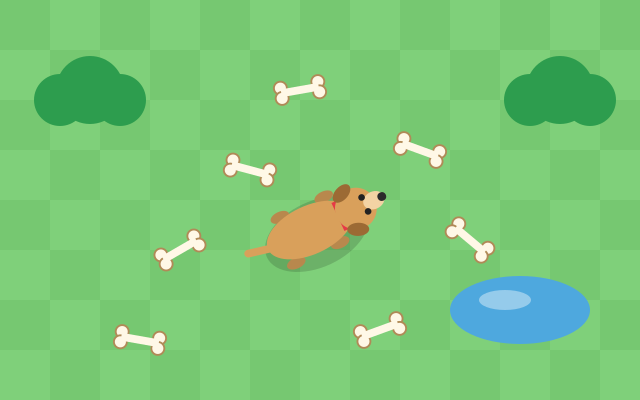
- Open-field collecting (Bone Collector). You move freely around a top-down yard, grabbing bones before the timer ends. Each level needs a target number of bones, and quick consecutive pickups build a combo multiplier.
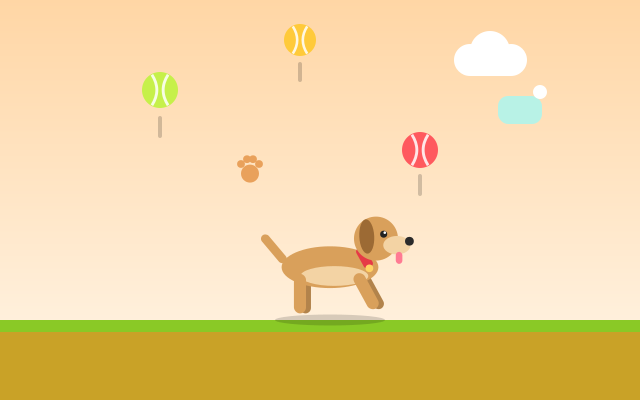
- Catching (Dog Ball Catch). Items fall from the sky and you move left and right to catch balls and treats while avoiding bad items. You have lives, a combo multiplier, and items fall faster over time.
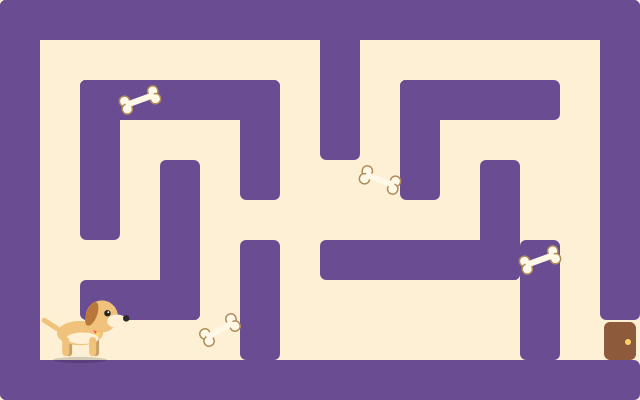
- Collect-and-exit (Puppy Maze). Mazes are generated for you to explore. You collect bones and reach the exit, and faster completion earns more points.
In open-field games, you choose the order. In catching games, the game chooses the order and you choose what to skip. In collect-and-exit games, you balance collecting against finishing. Each needs a slightly different plan.
Scan before you move
The first second of a level is the most valuable planning time you get. In Bone Collector, before rushing toward the nearest bone, take a quick look at the whole yard:
- Where are the bones clustered?
- Where are the bushes that block movement, and the puddles that slow you down?
- Which way are any sprinklers or bees moving?
A short scan often reveals that the nearest bone is a trap, sitting beside a puddle or at the far end of a dead-end corner, while a cluster slightly further away can be swept up in one smooth pass.
Plan routes, not targets
Beginners tend to chase one bone, then look for the next closest, then the next. This "nearest first" habit feels efficient but often zig-zags across the yard and leaves stragglers in awkward corners.
A better approach is to plan a sweep: a single path that passes through several pickups in a row. Useful patterns:
- Edge sweep. Follow one side of the yard, collecting everything along it, then cut across to the next area.
- Cluster hopping. Clear one tight cluster completely, then move to the nearest other cluster, rather than taking single bones in between.
- Save the easy ones. Bones in open, safe spaces can wait. Grab the ones near moving hazards while the hazard is away, and collect the safe ones afterward.
Route planning matters more as levels grow busier. When movement is slowed by puddles, a detour around one is often quicker than a straight line through it.
Build combos with rhythm
Both Bone Collector and Dog Ball Catch reward consecutive pickups with a combo multiplier. That changes how you should value each pickup: a bone collected quickly after the last one is worth more than the same bone collected after a long gap.
- Chain nearby items. In Bone Collector, a tight cluster is a combo opportunity. Approach it so you can collect every bone in quick succession without doubling back.
- Accept breaks gracefully. If a combo breaks, do not rush a long, risky trip to keep it alive. Start a new chain at the next cluster.
- In catching games, stay central. In Dog Ball Catch, drifting back toward the middle between catches means the next item is never too far away, which keeps chains going as falling speed rises.
For the risk side of combo play, see our guide on getting better scores in arcade games.
Handle hazards without losing momentum
Each collecting game adds something to make things harder.
Bone Collector: slowing and roaming hazards
Puddles slow you, bushes block your path, and sprinklers or bees roam the yard. The trick with roaming hazards is to wait for them to move away rather than squeezing past. A short pause often costs less than a collision. Plan your route so you pass through busy areas when the hazard is on the far side.
Dog Ball Catch: bad items and lives
Bad items such as soap bars and spiky objects fall alongside the good ones. Because you have a limited number of lives, avoiding a bad item is almost always worth more than catching one good item next to it. When the two fall close together, let the good item go.
Puppy Maze: moving obstacles and the exit
Later mazes add moving obstacles. Since faster completion scores more, not every bone is worth a long detour. A bone at the end of a long dead end may cost more in time than it adds. Collect bones that sit on or near your path to the exit, and skip the far-flung ones unless you are sure the trip is worth it.
Meeting targets versus maximising score
In Bone Collector, each level asks for a target number of bones before the timer runs out. That target is your first priority. Once you have safely reached it, you can play more aggressively for extra bones and combos. If time is short and you are below the target, switch to the simplest route to the remaining bones and forget about combos.
The Daily Dog Challenge sometimes sets collecting goals, such as collecting 50 bones or catching 20 balls. Those are target-first challenges, so the same principle applies: secure the goal, then go for style.
A simple improvement plan
- Play one level of Bone Collector on Easy using only edge sweeps, and one using only cluster hopping. See which suits you.
- Play a few rounds of Dog Ball Catch focusing purely on staying central between catches.
- Play a Puppy Maze collecting only the bones on the route to the exit, then one collecting everything. Compare your points.
Each difficulty has its own best score saved in your browser, so you can experiment freely on Easy without affecting your Medium or Hard records.
Frequently asked questions
Should I always go for the nearest bone first?
Not necessarily. Grabbing whatever is closest can zig-zag you across the map. Sweeping through a group of pickups in one path usually works better.
How do combos work in Bone Collector?
Collecting bones in quick succession builds a combo multiplier, so pickups made close together in time are worth more than ones with long gaps between them.
Is it worth collecting every bone in Puppy Maze?
Not always. Faster completion earns more points, so a bone at the end of a long dead end can cost more time than it adds to your score.
Spotted something that doesn't match the game? Tell us through the contact page. Read how we write and check guides in our editorial policy.