Most advice about scoring higher boils down to "play more". Practice matters, but it is slow if you do not know what you are practising. A score in an arcade game is not one number; it is a sum of separate parts, each earned in a different way. Players who improve quickly are usually the ones who know which part they are leaving on the table.
This guide shows how to break a score into components, spot the component you are neglecting, and decide when a risky play is worth making. The examples come from Dog Arcade games, but the thinking works for almost any arcade score.
Step one: list what the score is made of
Before trying to improve, write down, even just mentally, what actually earns points. Here is how several Dog Arcade games build their scores:
| Game | Score components |
|---|---|
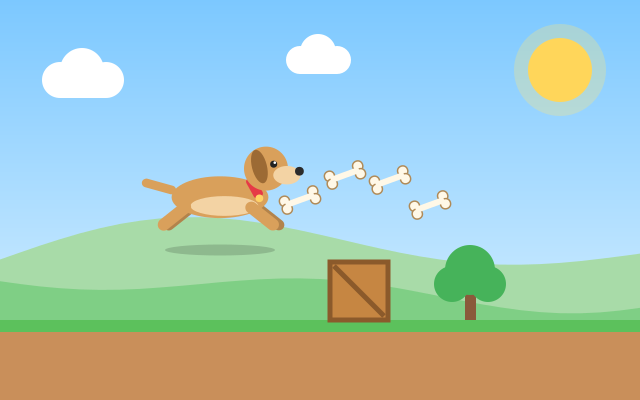
| Dog Runner | Distance covered plus bones collected |
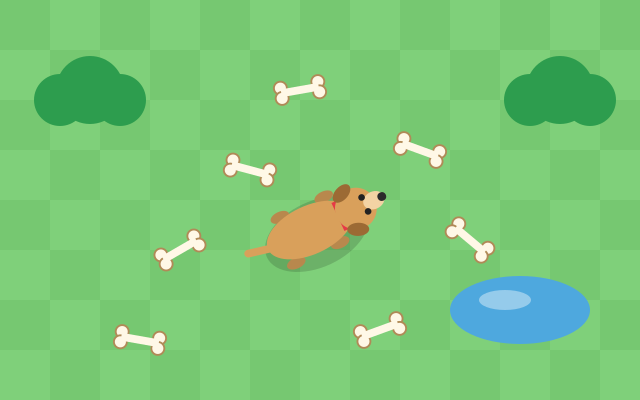
| Bone Collector | Bones, boosted by a combo multiplier for quick consecutive pickups |
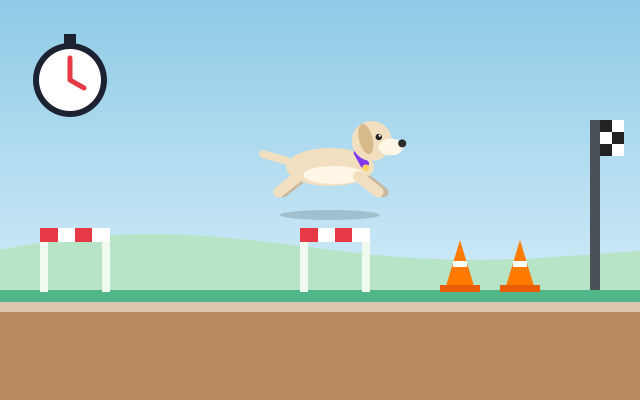
| Dog Obstacle Course | Completion time, mistakes (time penalties) and "perfect" clean clears |
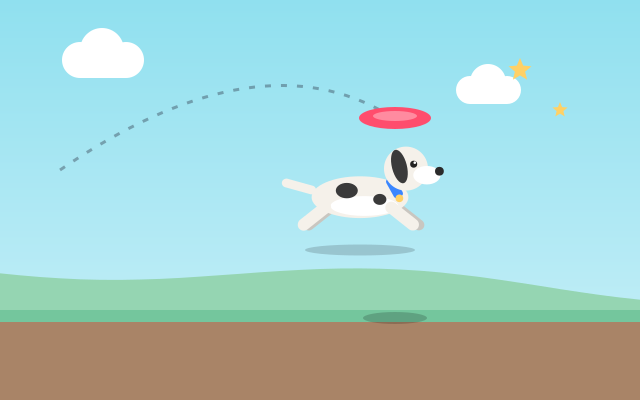
| Dog Frisbee Challenge | Catch timing, run distance and consecutive-catch streak |
| Fetch Challenge | Throw distance and landing near a target zone, over several rounds |
| Puppy Maze | Bones collected and how quickly you finish |
Two things jump out. First, almost every game has at least two components, and they often pull in different directions. Second, some components are "base" points that come just from surviving or finishing, while others are "bonus" points that require extra effort or risk. For a broader look at how these systems are designed, see arcade game scoring systems explained.
Step two: find your neglected component
After a few runs, ask which part of the score is weakest compared with what seems possible. Some typical patterns:
- In Dog Runner, if your runs are long but your bone count is low, you are playing too safely. If you collect lots of bones but runs end early, the bones are costing you distance.
- In Dog Obstacle Course, a fast time with several mistakes may score worse than a slightly slower, cleaner run, because each mistake is a time penalty and clean clears earn perfect bonuses.
- In Fetch Challenge, maximum-power throws can win distance but miss the target zone entirely. If your rounds look alike, try trading some power for accuracy.
Improving your weakest component almost always lifts the total faster than polishing your strongest one.
Step three: understand survival as the multiplier
In games where a run ends on a mistake, survival is not just one component; it is what allows every other component to keep growing. In Dog Runner, each extra second alive adds distance and creates more chances for bones. In Dog Frisbee Challenge, keeping lives means more frisbees to catch and a longer streak.
That means a risky play has a hidden cost. It is not just "might lose this bone". It is "might lose this bone and everything the rest of the run would have earned". The further into a good run you are, the more that hidden cost matters, because you are already scoring well and faster speeds mean more to lose.
A useful rule: take more risks early, fewer risks late. Early in a run, a failure costs little and experimenting teaches you something. Late in a run near your best, protect what you have.
Step four: weigh risk against reward, case by case
Every bonus opportunity can be judged with three quick questions:
- How much is it worth? A single bone is small; a combo-extending pickup in a multiplier game can be worth much more.
- How likely am I to fail? Be honest. If you get it right three times out of four, a failure every fourth attempt is a lot in a game where failing ends the run.
- What does failure cost? In Dog Obstacle Course, a mistake is a time penalty, so the run continues. In Dog Runner, hitting an obstacle ends everything. The same risk is much cheaper in the first game.
This is why the right amount of risk differs between games. Obstacle Course forgives mistakes, so attempting fast, aggressive lines is reasonable. Runners punish them absolutely, so caution pays.
Combos and streaks: the high-value, high-fragility components
Combo multipliers and streaks are often where the biggest scores come from, and also where most scores are lost. In Bone Collector, quick consecutive pickups build a multiplier, so the order in which you collect bones matters as much as how many you collect. In Frisbee Challenge, the consecutive-catch streak rewards consistency over flashy single catches.
Tips for combo-based scoring:
- Plan short chains. Look for clusters of pickups close together rather than scattered ones far apart. A chain of four nearby bones often beats a long dash for one.
- Do not chase a broken combo. Once the chain breaks, reset your thinking and start a new chain from the nearest cluster, rather than making desperate grabs.
- Protect streaks with simple catches. In a streak system, one reliable catch is worth more than one spectacular miss.
Our guide on mastering collecting games goes further into routing and combo planning.
Step five: pick one variable per session
Trying to improve everything at once rarely works. Instead, choose one component for a short session and ignore the rest. For example:
- Five runs of Dog Obstacle Course aiming for zero mistakes, ignoring time.
- Five rounds of Fetch Challenge aiming only for the target zone, ignoring distance.
- Five runs of Dog Runner collecting every safe bone, ignoring distance.
Your score may drop during the session. That is fine. When you go back to normal play, the practised component will be stronger, and the total usually rises.
Keep your bests meaningful
Dog Arcade saves a best score for each difficulty in your browser, so Easy, Medium and Hard each have their own record. Use this to your advantage: when a best on one level feels stuck, spending time on the next level up often improves your play on both. The faster pace of Medium makes Easy feel slower and more readable when you return. There are no global leaderboards, so the only score that matters is your own previous one. Our guide on how high scores work explains how these personal records are kept.
Frequently asked questions
Should I go for every bonus item I see?
No. Judge each one by its value, your chance of getting it, and what a failed attempt costs. In games where one hit ends the run, skipping a risky bonus is often correct.
Why did my score drop when I played faster in Dog Obstacle Course?
Speed only helps if it stays clean. Mistakes add time penalties and cost you perfect bonuses, so a rushed run can end up with a worse result than a controlled one.
Is my best score compared with other players?
No. Dog Arcade has no global leaderboards. Your bests are personal records saved in your browser, one per difficulty.
Spotted something that doesn't match the game? Tell us through the contact page. Read how we write and check guides in our editorial policy.