When a game feels too fast, it is tempting to think the only fix is quicker fingers. In practice, what feels like slow reactions in an arcade game is usually something else: noticing a hazard late, hesitating between two possible actions, or reacting to the wrong detail. Each of those can be improved with practice inside the game itself.
This guide focuses on the game side of responding quickly: which cues to watch for, how to cut down the decisions you make under pressure, and a set of short drills built around Dog Arcade games. It is about playing better, not about health or training claims, and it works best when you keep sessions short and enjoyable.
Break a reaction into three parts
From the moment something appears on screen to the moment your dog responds, three things happen:
- Noticing that something has appeared.
- Deciding what to do about it.
- Pressing the right input.
Most players only think about the third part. Yet noticing and deciding are where the biggest delays hide, and they are also the easiest to improve. You can notice sooner by looking in the right place, and you can decide faster by deciding in advance.
Notice sooner: the cues games give you
Arcade games communicate through a small set of signals. Learning to lean on the most useful ones is the quickest way to feel faster.
Where things enter
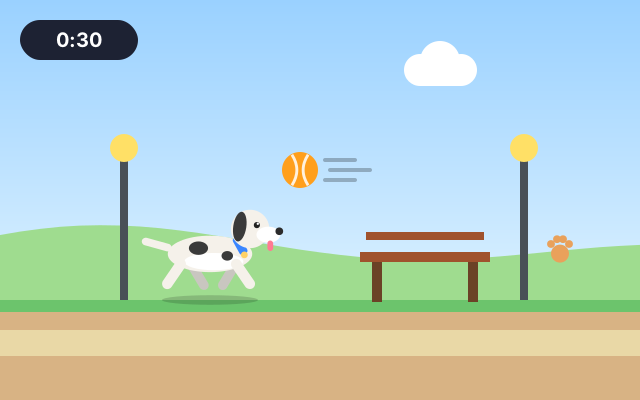
New objects always arrive from somewhere predictable. In side-scrolling runners such as Dog Park Dash, they come in from the right. In Dog Ball Catch, items fall from the top. Watching the entry zone rather than your character means you see everything a fraction earlier.
Silhouette and height
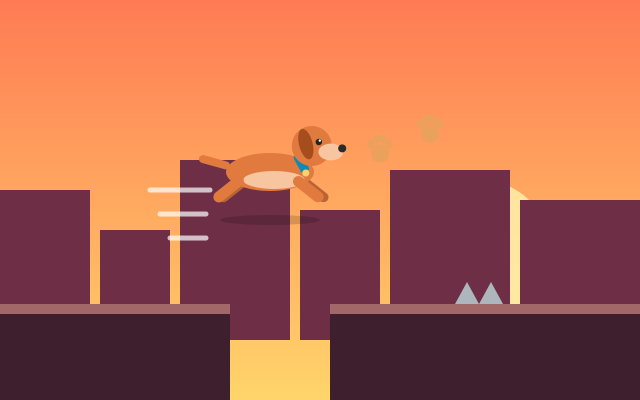
You can often classify an object by its rough shape or its height on screen before you see any detail. In Park Dash, an object at ground level calls for a jump, while a flying ball at head height calls for a duck. Training yourself to react to "low" or "high" rather than "fence" or "ball" removes a step.
Colour and category
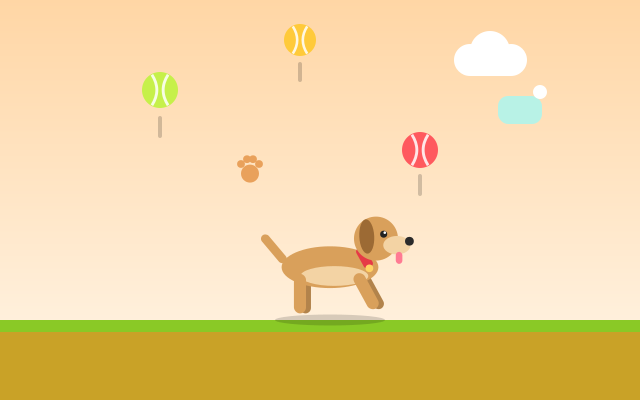
In Dog Ball Catch, you want balls and treats, and you want to avoid bad items such as soap bars and spiky objects. Instead of inspecting each falling item, get used to the overall look of "good" and "bad" things so you can sort them at a glance.
Motion
Moving things draw the eye. In games with moving hazards, such as the roaming obstacles in later levels of several games, motion is a cue you can use: notice the direction of movement first and the object second.
Sound
Where sound is on, audio can confirm a catch or pickup without you needing to look. That frees your eyes to move on to the next thing. Use the sound toggle to suit where you are, but try some practice runs with it on.
Decide faster: fewer choices under pressure
Every extra option slows you down, because your brain has to pick between them. You can shrink the number of live choices at any moment:
- Pre-decide your defaults. In Dog Jump Rush, decide before starting that you will use single jumps unless something clearly needs a second tap. Now most obstacles involve one choice, not two.
- Pre-decide what to ignore. In Dog Ball Catch, decide that you will never chase an item that forces you to cross underneath a bad item. That rule settles many close calls instantly.
- Return to a home position. In catching games, drifting back toward the middle between items means every next item is a short move away, never a long one.
A decision made calmly before the run is always faster than one made mid-panic.
Press cleanly: reduce the physical delay
The input itself has a few easy wins. Keep your finger resting lightly on or just above the key or screen area you use. On a phone, hold the device in a way that lets your thumbs reach the on-screen controls without stretching. Close heavy browser tabs so the game runs smoothly; a stuttering game adds delays that no amount of practice can overcome.
Drills you can do in Dog Arcade games
Short, focused sessions work better than long, tired ones. Try one or two of these per session.
Drill 1: the sorting drill (Dog Ball Catch)
Play on Easy and focus only on avoiding bad items. Do not try to catch everything. The goal is to train fast good-or-bad sorting. When avoidance feels automatic, add catching back in.
Drill 2: the over-or-under drill (Dog Park Dash)
Say "up" or "down" in your head the instant each obstacle appears, before it gets close. You are practising deciding early. Over a few runs, you will find the word arrives sooner and the action follows naturally.
Drill 3: the tracking drill (Dog Frisbee Challenge)
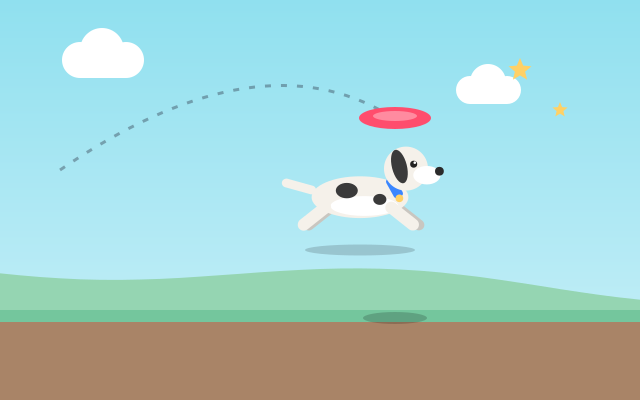
In Dog Frisbee Challenge, frisbees fly on arcs. For a few rounds, concentrate on moving under each frisbee as early as possible, even if you mistime the jump. You are practising reading a path at first sight.
Drill 4: the one-input drill (Dog Jump Rush)
Play several runs using only single jumps. It forces you to notice obstacles early enough that a single jump is sufficient, which sharpens your reading of what is coming.
Step up the pace gradually
Every Dog Arcade game has Easy, Medium and Hard settings, and each has its own best score in your browser. That makes difficulty a handy practice tool. Spend time on Medium until it feels manageable, then return to Easy: it will feel slower and roomier, and you will often set a new best there. Move up to Hard only when Medium feels calm rather than frantic.
The Daily Dog Challenge is also useful here. It sets a single fixed goal each day, such as catching a set number of balls or surviving a set time, which makes a neat daily check-in for these skills.
Know when to stop
Responses drop off when you are tired or frustrated, and practice then tends to reinforce bad habits such as panic presses. If several runs in a row end early, pause the game or take a break. Coming back fresh is often worth more than ten more attempts. For the finer points of pressing at the right instant, our guide on timing jumps is a good next read.
Frequently asked questions
Can I get faster just by playing more?
Playing more helps, but targeted practice helps more. Focusing on where you look and what you decide in advance usually makes a bigger difference than simply repeating runs.
Which Dog Arcade game is good for practising quick responses?
Dog Ball Catch is a good choice because it asks you to sort good and bad falling items quickly while falling speed increases.
Does the sound setting matter?
It can. With sound on, audio feedback confirms catches and pickups, so your eyes can stay on what is coming next. Toggle it to suit where you are playing.
Spotted something that doesn't match the game? Tell us through the contact page. Read how we write and check guides in our editorial policy.