A score is a game's way of telling you what it values. Two games can look similar on the surface and still reward completely different habits: one might care most about surviving, another about chaining quick pickups, another about finishing fast with no mistakes. Once you know what the scoring system values, you know what to practice.
This guide explains the main scoring building blocks used in arcade games, shows how they appear across Dog Arcade, and offers a simple way to read any new game's score so you can focus your effort where it counts.
The five scoring building blocks
Building block 1: distance and survival
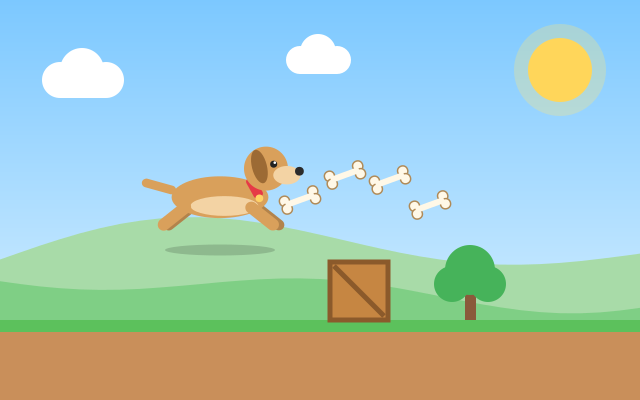
The most basic score is "how far did you get". In Dog Runner, your score combines distance with the bones you collect. In Dog Jump Rush, the goal is to survive as long as possible. Distance scores reward consistency above everything else: a slow, steady run that never crashes beats a flashy run that ends early.
The key insight is that distance compounds. Since speed usually rises over time, the later part of a run is both the hardest and the most valuable. Every obstacle you clear early is an investment in reaching the high-value stretch.
Building block 2: pickups
Collectables such as bones and treats add points on top of distance. They create an interesting decision: is a pickup worth the risk of reaching for it? A bone floating just above an obstacle might be free points, or it might pull your jump off its ideal timing.
A useful rule is to take pickups that sit on your natural path and skip the ones that force an awkward move, at least until you are comfortable with the game's pace.
Building block 3: combos and multipliers
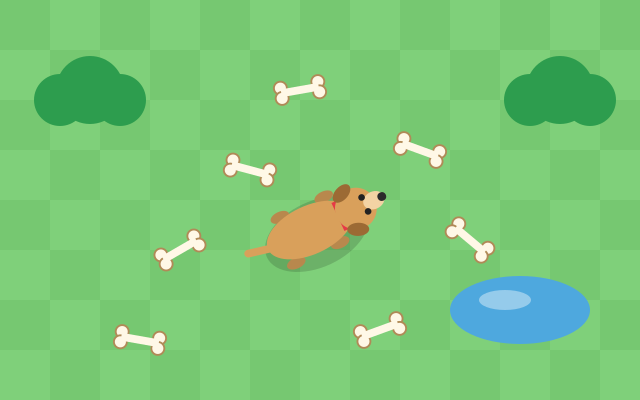
Combos reward doing things quickly and in a row. In Bone Collector, quick consecutive pickups build a combo multiplier. Dog Ball Catch has a combo multiplier for catching items without a break, and Dog Park Dash rewards collecting treats for combos.
Multipliers change how you should move. Instead of grabbing the nearest item, it often pays to plan a route through a cluster of pickups so they come in a quick sequence. Losing a combo usually costs more than missing a single item, so a tidy chain matters. Our guide to mastering collecting games covers route planning in more detail.
Building block 4: timing and precision bonuses
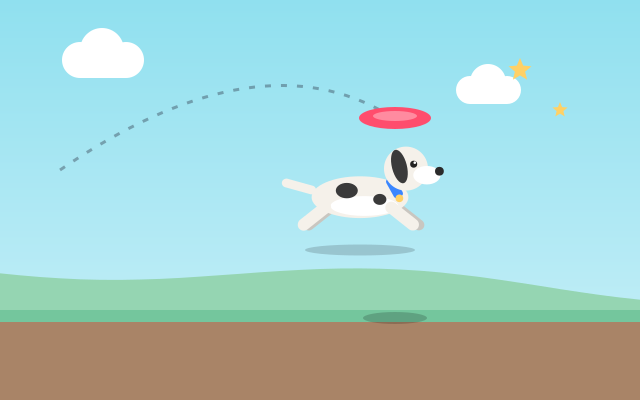
Some games reward how well you do something, not just whether you do it. In Dog Frisbee Challenge, you score for catch timing (catching at the peak of the jump), the distance of your run, and your consecutive-catch streak, while a miss costs a life. In Fetch Challenge, points come from throw distance and landing near a target zone over several rounds.
Precision scoring means a "good enough" action leaves points on the table. It is worth slowing down to learn what a perfect action looks like, because the gap between an okay catch and an ideal one adds up over a full game.
Building block 5: time, mistakes and perfects
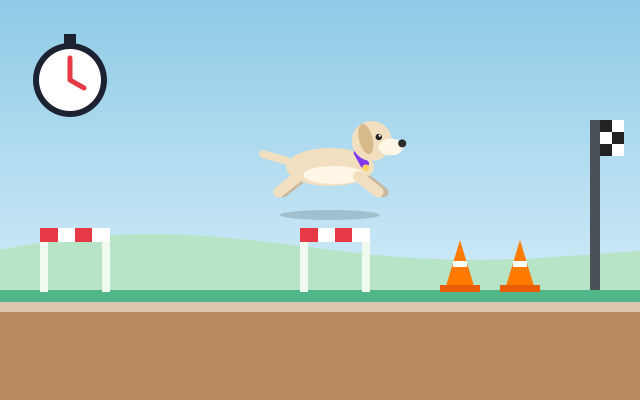
Course-based games often score how cleanly and quickly you finish. Dog Obstacle Course is a fixed-length agility course where hitting an obstacle counts as a mistake with a time penalty rather than ending the run. Clean clears earn a "perfect" bonus, and your score comes from time, mistakes and perfects together.
Dog Race takes a different approach: your best time is saved, and lower is better. There is no benefit to playing it safe and slow here; the target is a faster lap next time.
How the systems compare
| Scoring focus | Dog Arcade examples | What to practice |
|---|---|---|
| Distance and survival | Dog Runner, Dog Jump Rush, Puppy Jump | Consistency and not crashing early |
| Combos | Bone Collector, Dog Ball Catch, Dog Park Dash | Routing through pickups in quick succession |
| Timing quality | Dog Frisbee Challenge, Fetch Challenge | Hitting the ideal moment or aim |
| Clean, fast finishes | Dog Obstacle Course, Dog Race, Puppy Maze | Avoiding mistakes and tightening lines |
How to read a new game's score
When you try a game for the first time, play one relaxed round and watch the score counter closely. Ask yourself:
- Does the number tick up on its own while I survive? Then distance matters.
- Does it jump when I collect something quickly after another pickup? Then combos matter.
- Do I get extra for doing something at just the right moment? Then precision matters.
- Is the result a time? Then speed and avoiding penalties matter most.
With that answer in mind, your second round can focus on the thing that actually moves the number.
Common scoring mistakes
A few habits quietly hold scores down, whatever the game:
- Chasing every pickup. In distance-based games, one greedy reach that ends the run early costs far more than the bone was worth.
- Breaking a combo to play safe, then rushing to rebuild it. If a chain is lost, settle back into steady play first. Frantic catch-up moves are where the next mistake comes from.
- Treating penalties as free. In Dog Obstacle Course, a mistake does not end the run, but each one adds time and removes a chance at a perfect bonus.
- Ignoring the quality of actions. In Dog Frisbee Challenge, a catch is not just a catch; one taken at the peak of the jump scores better than a scrappy one.
Fixing just one of these tends to raise your typical score more than any single lucky run.
Scores are personal, not global
Dog Arcade has no accounts and no global leaderboards. Your best score is saved per difficulty in your own browser, which means the only score you are competing against is your own. That is a good thing for learning: you can see small improvements clearly without comparing yourself to anyone else. For the technical side of how that works, read how high scores work, and for practical ways to push your number up, see how to get better scores in arcade games.
Frequently asked questions
Is it worth risking a jump to grab a bone?
Only when the bone is close to your natural path. Early in a run, staying alive is usually worth more than one extra pickup.
Why does Dog Race save a lower number as my best?
Dog Race records a best time, so a smaller number means a faster race and a better result.
Can I compare my score with other players?
Not on Dog Arcade. There are no global leaderboards; each personal best stays in the browser where you set it.
Spotted something that doesn't match the game? Tell us through the contact page. Read how we write and check guides in our editorial policy.